Funny Videoof Ineed a Fing Bresk for Parrnts
Answers to questions asked by hockey parents
It's natural for parents or guardians new to pocket-size hockey or hockey in general to accept questions, whether they're near rules, equipment, registration, benefits, safety or something else. Hockey Canada'south hockey parent FAQ offers answers to some of the virtually mutual inquiries.
Practice you take a question that isn't answered? Submit your question and we volition do our best to respond it.
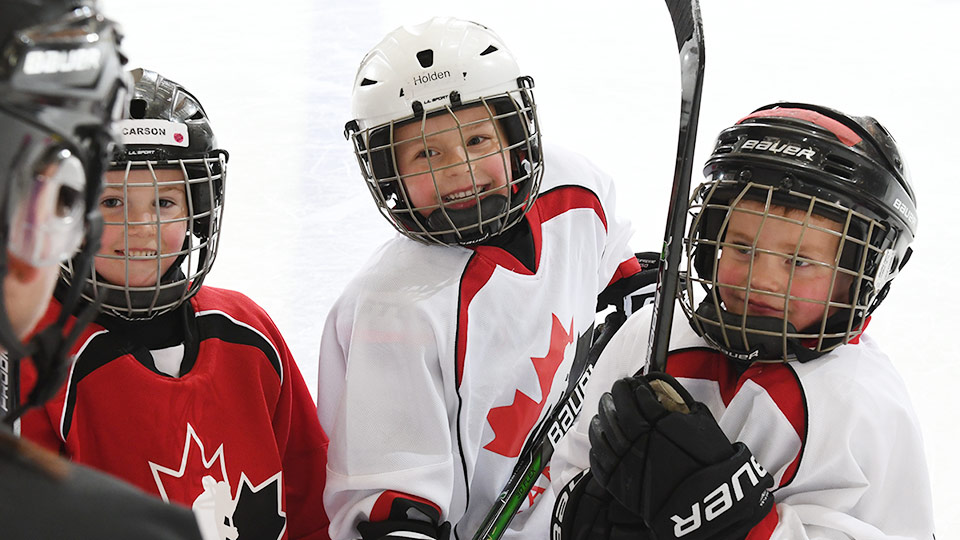
Full general
Why should my child play hockey?
What are the costs of hockey? How is the toll of hockey determined, and how much of my fees go toward licensing and insurance?
How do Hockey Canada and local small-scale hockey associations ensure histrion condom?
What is the boilerplate weekly time commitment?
Registration
How does the registration organization work?
How do I observe out which local hockey association my child is designated to? Who sets the boundaries between associations?
What are the pocket-sized hockey age categories, and how are they determined?
What levels of hockey are bachelor? What are the differences between the levels, and what are the benefits of each one?
How do local associations determine which players are assigned to AE and Rep teams?
Does Hockey Canada condone pre-formed AE and Rep teams?
When does registration start?
How do I annals my child? / How exercise I access my child's registration data?
At what historic period can my child start playing organized hockey?
Why does Hockey Canada mandate cantankerous-ice games for Timbits U7 players and one-half-ice games for U9 players?
What should I know most unsanctioned hockey programs and/or leagues?
Are there female-only teams?
How will I get my income tax receipt?
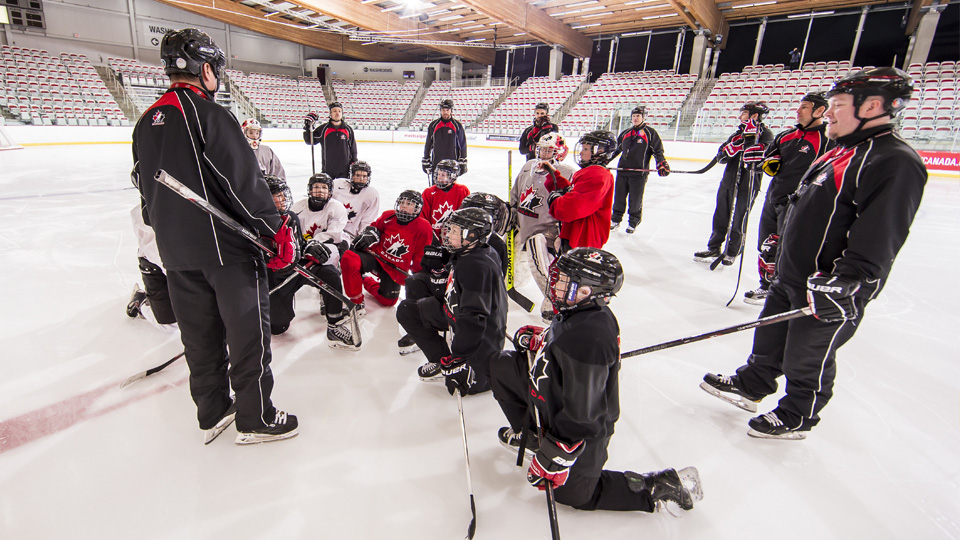
Coaching / Respect in Sport
What training do hockey coaches receive?
Are in that location professional person coaches at the minor hockey level?
What is the Respect in Sport (RIS) program?
Who is the RIS Activeness Leader Program for?
Who is the RIS Parent Program for?
How do I have the RIS Parent Programme?
I already took RIS with some other sport/ for another kid. Do I have to take it again?
I already took RIS for Coaches (Activity Leader Plan). Does this satisfy the RIS for Parents requirement also?
Why do I take to complete RIS?
I already took the Hockey Canada Speak Out grade. Practice I even so have to take the RIS Activity Leader Program?
How often exercise I have to recertify through RIS?
I want to become a coach for my kid's team. How do I register every bit a double-decker?
Do I need to be a former player in order to become a coach?
How can I larn the rules of organized hockey?
Hockey Canada Safety Program
Does every minor hockey team require a Condom Person?
What are the roles and responsibilities of the Safety Person?
Does the Safety Person have to be a medical professional?
What type of preparation does the Safety Person accept?
How do I become a Rubber Person for a team?
What training volition I accept to take?
Financial Support
What financial support is available to families?
Total-Contact Hockey
How are younger players prepared for the transition to torso checking in hockey?
What rules, policies and procedures has Hockey Canada mandated to prevent concussions in minor hockey?
Are at that place non-body checking leagues?
Logistics, Communications & Scheduling
What if nosotros're moving to a new city? How do fellow member transfers work?
What days of the week volition my child be on the ice?
Do we have to travel out of boondocks, and if and then, how oftentimes?
What equipment does my child demand? How much does it price and where can I detect it?
Apart from registration and equipment, what other costs are involved in hockey? How volition they be paid for?
General
Q: Why should my child play hockey?
Hockey is a fun, family-friendly activity that offers people of all ages an opportunity to make new friends, get physically active, build important skills like hand-center coordination and strategic thought, and create memories that last a lifetime.
Hockey is also a peachy sport for building graphic symbol, and it gives those involved the opportunity to acquire the value of teamwork, sportsmanship, and personal responsibility. In addition, the National Sports of Canada Act named hockey Canada's official winter sport, making it a quintessential part of the Canadian identity.
Q: What are the costs of hockey? How is the cost of hockey determined, and how much of my fees become toward licensing and insurance?
Hockey costs vary depending on the association, historic period group and skill level in question. Costs typically include registration, tournament fees, equipment costs, insurance, arena rental time and travel expenses. A 2011-2012 survey past Hockey Canada found that the average cost of hockey enrollment is $i,200 for registration and ice time.
Registration costs and tournament fees are set at the local association level. Equipment costs are fix by manufacturers and retailers. Arena time costs are set past local arenas.
Insurance costs are ready past Hockey Canada in partnership with BFL Canada, the official insurance benefits provider for all Hockey Canada-sanctioned tournaments, games, practices and events. The current insurance program costs $21.30 per participant per flavor and provides $20 one thousand thousand in general liability coverage, plus accidental medical and dental insurance, as well as adventitious decease or dismemberment, and directors and officers liability insurance, to all players, coaches, volunteers and referees registered with Hockey Canada.
Q: How practice Hockey Canada and local hockey associations ensure player safe?
Rubber is Hockey Canada's number i priority. That'south why Hockey Canada's doesw non allow fighting in minor hockey.
Any player who participates in a fight in any way will receive both a major penalty and a game misconduct penalty. All major penalties for fighting carry an automatic i (i) game break, two (2) games if the fight occurs in the terminal 10 minutes of play.
The instigator will also receive a small-scale penalty, and any player who retaliates later on being struck will be given a minor penalization.
Echo offenders may confront indefinite interruption, a formal disciplinary hearing, or expulsion from the league. Hockey Canada members have the authority to assess farther penalties for fighting at their discretion.
Q: What is the average weekly fourth dimension delivery?
Depending on the level of hockey your kid plays, your time commitment could range from merely 3 hours per week for Business firm League upward to half-dozen-7 hours per week (plus travel time) for Rep.
Registration
Q: How does the registration system work?
You tin register your kid with your local hockey association in person or online. In order to register your child, you will demand to complete a form list your kid's personal details like proper name, address, date of birth, hockey history and provincial or territorial medical insurance number.
If this is your kid'southward first time registering with a local hockey association, you may likewise be expected to provide a copy of your child's birth certificate and 2 documents proving your identify of residence. Suitable proof of residence could be a credit card statement, income tax assessment, school registration certificate, utility bill or proof of homeowner's or renter's insurance.
Q: How do I find out which local hockey association my child is designated to? Who sets the boundaries between associations?
Local pocket-size hockey association boundaries are prepare by Hockey Canada members. You can access a zone map of local minor hockey associations, and find out which association zone you're located in, through your Hockey Canada fellow member or your local hockey clan.
Hockey Canada has likewise created a tool that tin can assistance you find your local association:
https://annals.hockeycanada.ca/annals
Note: Local hockey associations are responsible for ensuring the accuracy of their geographical boundaries. Contact your local association to verify its boundaries and resolve discrepancies.
Q: What are the minor hockey age categories, and how are they determined?
The small-scale hockey age categories are:
- Timbits U7 – for players six years of age or younger
- U9 – for players seven and 8 years of age
- U11 – for players ix and 10 years of age
- U13 – for players 11 and 12 years of age
- U15 – for players 13 and 14 years of age
- U18 – for players fifteen, 16, and 17 years of age
- U21 – for players 18, 19 and twenty years of age
Players are placed into historic period categories according to what historic period they will be by December 31 of the current calendar yr.
Q: What levels of hockey are bachelor? What are the differences between the levels, and what are the benefits of each i?
Most local hockey associations offering two to three levels of play in any given age category: Firm/Local League, AE and Rep. (Note that not all associations offer AE.)
Firm League hockey, sometimes called local league hockey, is a recreational level of play. Near teams at this league level have 1-2 practices and one game per week, making it easy to fit house league hockey into a hectic family schedule. Registration is typically cheap, and abroad games are rarely hosted more than an hour's drive abroad. House league players are almost always given equal ice time regardless of skill or talent, and teams play in fewer tournaments throughout the season.
AE (Alternate/Additional Entry) hockey (not bachelor in all associations) is a higher-calibre level of play for players who evidence strong skill and promise. AE teams are comprised of players who evidence sufficient skill to perform equally Rep players, only, due to team roster size constraints, cannot be placed on the association's primary Rep team. Virtually local hockey associations require players to try out for Rep hockey before they will exist considered for an AE team. AE teams serve as the official alternates for Rep teams, and are typically formed in local hockey associations where there are enough skilled Rep-level (or nigh-Rep-level) players for two teams in any given historic period group. Non all communities take a population that can support an AE team, and therefore your local hockey association may or may non offer AE hockey.
AE teams typically play abroad games that are up to a 90-minute driving distance from their home arena, and play several tournaments throughout the season. Nearly AE teams have two ninety-minute practices per week, plus one domicile game and ane away game. AE teams oft participate in overnight tournaments.
Rep (Representative) hockey is the highest calibre of hockey available in any given association. Rep teams typically have 11 to 15 players who stand for the more skilled and talented players in their age group. Rep hockey is a fast-paced, highly-competitive level of hockey that offers exceptional players a challenge.
Rep hockey is about twice the time delivery of house league hockey. Await a minimum of one practice, one development session and two games per week. Rep teams may also participate in overnight tournaments.
Q: How do local associations determine which players are assigned to AE and Rep teams?
AE and Rep teams host tryouts prior to the beginning of the hockey season. Head coaches on AE and Rep teams have the exclusive right to determine which players will exist offered spots on their teams.
When evaluating potential players, AE and Rep coaches typically look for a certain set of attributes:
- Skill
- Skating
- Passing
- Shooting ability
- Puck control
- Playmaking power (offensive and defensive)
- Sportsmanship
- Teamwork
- Respect
- Positive attitude
- Difficult piece of work
- Speed
- Skating
- Fore-checking
- Back-checking
- Preparedness
- Shows up on time
- Brings all necessary equipment to the rink
- Skates are sharp
- Wears a jersey
- Attitude Toward Learning
- Power to recover from mistakes without becoming frustrated
- Ability to pay attention to instructions and follow the drill
- Leadership
- Takes initiative to help other players acquire new skills
- Gives encouragement to other players
- Sets an example through hard piece of work
- Skating Power
- This is more than simply the power to turn, stop and skate quickly
- AE and Rep coaches want to see players skate hard during every minute of their shift
Q: Does Hockey Canada condone pre-formed AE and Rep teams?
Absolutely not.
Determining the histrion roster for an AE or Rep team before tryouts encourages nepotism, infighting, the growth of ego, and unproductive and unhealthy group dynamics.
Hockey is about fair play, difficult work, building community and having fun. Pre-formed teams undermine all of these values, and that is why pre-formed teams have no place under the Hockey Canada banner.
If you believe your child was unfairly denied a spot on an AE or Rep team due to bias, nepotism or factors unrelated to skill, mental attitude or performance, y'all should file a formal appeal with your local hockey association.
Hockey Canada encourages local hockey associations to bring in outside evaluators from other associations to perform player evaluations in social club to ensure objectivity.
Q: When does registration starting time?
Verbal registration start and cut-off dates vary across local hockey associations. However, virtually local associations tend to follow a similar schedule.
Early registration typically opens in the spring or summer (between April and June), with main registration usually taking place during July and August. Evaluations or endeavour-outs typically happen in September.
It is upwards to each individual local hockey association to decide when to open and close player registration. Contact your local hockey clan for exact open, cut-off and effort-out dates.
Q: How do I register my child? / How do I access my child's registration information?
You can register your child in person or online through your local hockey association. New players are typically expected to register in person at their local association. Returning players tin can register online through TeamSnap in areas where TeamSnap is bachelor, or through your local Hockey Canada registration portal.
Contact your Hockey Canada member to learn more.
Q: At what age tin can my child kickoff playing organized hockey?
Hockey Canada offers organized hockey starting at the Timbits U7 (cross-ice) level for children who will exist either five or half-dozen years old on or before December 31 of the current hockey season.
After finishing the Timbits U7 program, players motion on to a two-year U9 program. Children who will be turning seven years old on or before December 31 of the current hockey flavor are considered U9 players. All U9 players begin playing half-ice at the start of U9 Year 1 and transition to total-ice hockey during the 2d half of U9 Year two.
Non all local hockey associations offer two-twelvemonth U9 programs. In local hockey associations with one-year U9 programs, players play one-half-ice games during their U9 twelvemonth and move up to total-ice hockey at the commencement of their U11 twelvemonth.
Q: Why does Hockey Canada mandate cross-water ice games for Timbits U7 players and half-ice games for U9 players?
The Timbits Hockey Canada U7 Plan is designed to make your kid's first experience with hockey a prophylactic and memorable one. This learn-to-play program scales hockey downward to a smaller playing expanse that allows younger players to take more fun and better develop their skills.
Y'all tin can larn more than almost the Timbits U7 program here.
Q: What should I know nearly unsanctioned hockey programs and/or leagues?
Non-member programs or unsanctioned leagues are leagues that are not affiliated with Hockey Canada and operate outside of Hockey Canada's existing modest hockey arrangement. Unsanctioned leagues are wholly responsible for their own oversight. Information technology is upwards to each private unsanctioned league to determine how issues like injuries, harassment and rule infractions are handled.
In some cases, unsanctioned leagues operate without a constitution, without bylaws, without insurance and with their ain customized rulebook for game play.
Hockey Canada has no regulatory authority over unsanctioned leagues, and cannot hear appeals, insure players or ensure a consistently loftier standard of game play in unsanctioned leagues. Information technology is for this reason that Hockey Canada does not condone, endorse or create affiliations with unsanctioned leagues.
If you choose to annals your child in a non-fellow member league, your child will immediately lose all Hockey Canada membership privileges for the remainder of the hockey season.
Q: Are there female-only teams?
Yep! While many hockey teams are co-ed, Hockey Canada and its partner organizations are as well proud to offer a variety of female-only options for girls and young women interested in playing hockey. Over 89,000 girls and women play hockey in Canada, and female-only leagues are bachelor in and effectually major cities in every province. Contact your local hockey association for details on female person-simply leagues in your area.
If you're looking to innovate your daughter to hockey for the first fourth dimension, there are a multifariousness of co-ed options, such as the Timbits Hockey Canada U7 Program for children under seven years of age and the U9 age category for children under nine.
The NHL/NHLPA Showtime Shift program, organized in partnership with Hockey Canada and Bauer Hockey, offers girls-only sessions in communities all across Canada. With an accent on fun, First Shift is an introductory half dozen-week program that allows children aged six to 10 to endeavour hockey for the kickoff time.
There's too the Esso Fun Days programme, a hockey experience program that combines on-ice and off-water ice instruction to give girls and women of all ages a first taste of organized hockey, with no fees and no obligations to sign upwardly for a league.
High school-historic period players looking to go along playing organized hockey afterward graduation volition find a number of female-only options. Most provinces have at to the lowest degree one female-only league, and there are tournament and championship opportunities for female under-18 players.
At the elite level, particularly skilled players between the ages of 15 and 17 tin compete for the Esso Cup, Canada's Women's U18 Club Championship.
Q: How will I become my income tax receipt?
If you registered online, you will receive your income revenue enhancement receipt as an email attachment. Await for an e-mail from [e-mail protected]. (If the email isn't in your inbox, it could be in your Spam/Junk folder.)
You lot can as well download your income tax receipt from TeamSnap. Visit your local hockey association'south website to access your portal. Your tax receipt will be nether the My Registration History or Order History tab. You lot will need the ID and password yous used to prepare up your account.
If you still cannot access your income revenue enhancement receipt, contact your local hockey association'due south registration department for assistance.
Coaching / Respect in Sport
Q: What grooming do hockey coaches receive?
All hockey coaches must obtain the advisable coaching level as defined past NCCP ( National Coaching Certification Plan) regulations, past the deadline fix by the Hockey Canada fellow member. Coaches are trained by the provincial and regional members and are certified by Hockey Canada and the Coaching Association of Canada. Individuals that need Coach 1 (Intro to Motorcoach) or Coach 2 (Coach Level) must complete the online coach modules delivered through Hockey University (HU), and then fully attend and participate at an in-person jitney clinic to accomplish 'Trained' status.
Q: Are there professional person coaches at the minor hockey level?
The determination every bit to whether or not to pay a bus rests with the private local hockey clan in question. Well-nigh associations choose to keep coaching a strictly volunteer position, while others opt to pay a modest honorarium of a few thousand dollars per season in club to aid the coaches with the various expenses they incur in gild to coach hockey.
There are as well coach mentors available to local hockey associations through Hockey Canada members. Coach mentors are experienced professionals who piece of work with hockey coaches to develop their coaching skills.
Q: What is the Respect in Sport (RIS) plan?
Respect keeps hockey fun.
Hockey is meant to be an enjoyable, grapheme-edifice experience for players and parents alike. But one reason players and parents get out the minor hockey system is disrespectful behaviour in the arena. That's why maintaining respect in the hockey environment is essential.
Respect in Sport information indicates that the No. ane threat facing community sports today is harassment. 70 percent of children drib out of organized sports past historic period xiii – more often than not due to bullying, discrimination, abuse or harassment.
Respect in Sport aims to alter that.
Respect in Sport promotes the safety and well-being of all minor hockey players, encourages productive communication with officials and coaches, and fosters a positive hockey experience for everyone involved.
Past promoting respect on and off the water ice, Respect in Sport is designed to foreclose harassment and keep children involved in organized hockey, which means they can continue to experience the benefits of exercise and teamwork that come with playing minor hockey.
Parents and coaches are uniquely positioned to maintain a positive culture at the minor hockey level, which is why it'southward so important for them to model good behaviour for Canada'southward youth. Over 1 million Canadians are Respect in Sport-certified. With Respect in Sport, parents and coaches have the tools to maintain a fun, positive environs on the rink and to keep hockey fun for children of all ages.
You tin can learn more near Respect in Sport for Parents here. Boosted details about Respect in Sport for Coaches can be constitute here.
Q: Who is the RIS Activity Leader Plan for?
The Respect in Sport program is available in both English language and French for both parents and coaches.
The RIS Activity Leader Program is for coaches, trainers and volunteers who will be leading squad activities. Respect in Sport for Action Leaders teaches activity leaders and coaches how to recognize the signs of bullying, corruption, harassment and bigotry, how to intervene in these situations, and how to preclude bullying, abuse, harassment and discrimination from happening in the hereafter.
Q: Who is the RIS Parent Program for?
Respect in Sport for Parents equips parents with the tools they need to support their children and maintain a safety, healthy environment in which to play hockey. RIS for Parents is designed for parents of pocket-size hockey players.
Q: How do I accept Respect in Sport?
Y'all can register for Respect in Sport through your provincial/territorial member.
RIS for Parents consists of vi modules, each one lasting well-nigh 10 minutes. RIS for Coaches consists of 6 modules lasting 30 minutes each.
Registering for the Respect in Sport plan costs $12 for parents or $xxx for coaches.
Y'all can admission Respect in Sport through the Apple App Shop or Google Play Store.
Q: I already took RIS with some other sport and/or for another child. Exercise I take to take it again?
Not if your RIS certification is still valid. Y'all will, even so, accept to register your certificate number with Hockey Canada. Contact your Hockey Canada member for instructions.
Depending on when y'all last completed RIS for Parents, you may have to recertify. Some member s crave parents to recertify every iii-four years. If your RIS certification has expired, contact your local member most renewing it.
Q: I already took RIS for Coaches (Activity Leader Plan). Does this satisfy the RIS for Parents requirement besides?
No. The RIS for Activity Leaders and RIS for Parents programs are ii very unlike programs. If you are both a parent and a omnibus, you will need to accept both programs.
Q: Why do I have to consummate Respect in Sport?
Completing RIS is a condition of participation in most local hockey associations. At least ane parent or caregiver in your household must maintain active RIS certification for your child to be eligible to play hockey. Completing RIS is as well a great way to model respect for your child.
Q: I already took the Hockey Canada Speak Out form. Do I still have to take the RIS Activeness Leader Plan?
The Speak Out programme has been grandfathered in equally the RIS Activity Leader Program. If your Hockey Canada Speak Out certificate is nonetheless valid, you may non need to consummate the RIS Activeness Leader Plan. Check with your local hockey association to exist certain.
Notwithstanding, you may still have to have RIS for Parents.
Q: How often exercise I have to re-certify through Respect in Sport?
Parents and coaches may be required to re-certify a minimum of once every iv years. Please check with your local hockey association.
Q: I desire to go a coach for my child's team. How do I register as a coach?
Coaching your child'due south team is a fun and engaging style to create quality family time and have a lasting touch on on your child's life. That'south why Hockey Canada has created an easy-to-follow road map for parents who want to become coaches.
The beginning step to condign a hockey coach is acquiring NCCP ( National Coach Certification Program) training.
The NCCP is the Coaching Association of Canada's flagship plan. Hockey Canada members offering the NCCP at various clinics effectually the country.
Hockey Canada and the NCCP offer six levels of coaching certification in three categories. You lot can also pursue instructional streams to specialize in coaching skating, checking skills, goaltending or developing defenseman skills.
Yous can learn more than about the unlike certification categories and instructional streams here.
You tin annals for NCCP training through Hockey Canada'due south eHockey organization.
Q: Practice I demand to be a onetime player in order to go a coach?
No. Officially, the only requirement to get a hockey coach is to complete the appropriate level(s) of Hockey Canada's NCCP Training and Certification.
However, coaches are generally expected to take a knowledge of hockey technique and strategy that is best mastered by first playing the game. If you lot want to become a coach but have never played hockey before, you may want to find a local rink that offers drop-in developed hockey. You can likewise join the Adult Condom Hockey League, a recreational non-contact Hockey Canada member league with over 100,000 developed players across Canada.
Q: How tin can I learn the rules of organized hockey?
Hockey Canada'due south Rule Book mobile app for Apple and Android devices is a convenient way to have the most upwards-to-appointment hockey rulebook at your fingertips.
Hockey Canada Safety Program
(Hockey Trainers Certification Program in Ontario)
Q: Does every small-scale hockey team crave a Safety Person?
Yes. Under Hockey Canada regulations, each squad must have i designated Rubber Person who has completed the Hockey Canada Prophylactic Program.
Q: What are the roles and responsibilities of the Safety Person?
As a Safety Person and team official, you play a leadership part in implementing effective hazard management programs with your team, enhancing the safety of players and all involved in amateur hockey.
Q: Does the Condom Person have to exist a medical professional?
Not necessarily. Just Hockey Canada does recommend that the Safety Person take a first aid/CPR form too as the Hockey Canada Safety Programme itself.
Q: What type of training does the Safety Person have?
The Hockey Canada Condom Program teaches risk management practices, injury recognition and emergency action planning in the team environment.
Topics include:
- Roles and responsibilities of the Safety Person
- Risk management tips on the ice and off
- Hockey Canada Insurance Program
- Emergency activity planning
- Recognition of serious and not-serious injuries in the game such as concussions, spinal injuries, and bumps & bruises
- On- and off-ice conditioning
- Responsible return to play
- Equipment plumbing equipment
Q: How do I get a Safety Person on a team?
If y'all are interested in becoming a Prophylactic Person, contact your local hockey clan.
Q: What grooming will I accept to have?
A Safety Person must complete an 18-module online program available through Hockey Canada's Hockey Academy. If interested, contact your local hockey association. It is also highly recommended that the Safety Person completes a standard first help course and a CPR course.
Financial Back up
Q: What financial support is available to families?
Hockey is for everyone. No child should exist denied the opportunity to play hockey due to a difficult financial state of affairs.
Hockey Canada and all of its partner organizations work hard to ensure that pocket-sized hockey registration fees are as affordable every bit possible across the country. Withal, it recognizes that equipment prices, tournament fees and other expenses can quickly drive upward the cost of enrolling your child in minor hockey.
If you are in need of financial assistance, in that location are programs available that can help subsidize the cost of your child's small hockey registration and equipment:
The Big Play is a joint charity program administered by Hockey Canada in partnership with Canadian Tire Jumpstart Charities. Eligible families can receive upward to $500 per kid through the programme. This money can exist applied toward your child's registration fee or toward a purchase of hockey equipment at any Canadian Tire retail location. Fiscal aid is provided on a first-come, commencement-served basis. Visit The Big Play website to learn more or to apply for funding.
KidSport Canada is a national not-for-profit organization dedicated to providing children all across Canada with opportunities to play sports of all kinds. You tin can utilise for financial assistance through your local KidSport chapter, which y'all can find on the KidSport Canada website.
YMCA Canada also offers a financial assistance programme, YRASP (YMCA Recreation, Arts, and Sports Plan). The YRASP programme provides funding of up to $500 per kid per year to cover registration, equipment and transportation costs for organized arts, recreation and sports programs. YRASP is available to families with children aged 17 or nether whose almanac household income is under a certain threshold. Yous can apply for YRASP through your local YMCA chapter, which y'all can find on the YMCA website.
The NHLPA (National Hockey League Players Clan) operates the NHLPA Goals & Dreams Fund, a charitable fund that supports grassroots hockey past donating money and equipment to volunteer-based grassroots hockey organizations. Eligible organizations tin can receive brand new skater and goalie equipment for up to l children.
Your Hockey Canada fellow member or local hockey association may likewise take its own fiscal assistance programs. Contact your fellow member or local hockey association to acquire more.
Full-Contact Hockey
Q: How are younger players prepared for the transition to hockey with body-checking?
Trunk-checking is an essential skill in modern hockey, but one that must exist mastered prior to use in order to ensure the safe of all players. That is why, in September 2013, Hockey Canada announced a ban on body-checking at the U13 level. All games played at U13 and beneath are non-trunk-checking games. Hockey Canada also implemented a new national coaching program oriented effectually teaching safe body contact and body-checking techniques.
Players in contact leagues transition to body-checking hockey at the U15 level. Hockey Canada has mandated a new checking model that gradually teaches players the skills they need to safely play contact hockey.
Yous can acquire more nigh the checking skills model hither.
In an attempt to ensure all players feel comfortable making the transition, Hockey Canada has created an extensive library of instructional videos and written documentation for coaches who want to teach checking skills to their players. These materials are available online through Hockey Canada'southward Coaching site.
Q: What policies and procedures has Hockey Canada mandated to prevent concussions in minor hockey?
Concussions are serious injuries that can cause long-term health issues and impairments. That's why Hockey Canada has developed a full-scale array of concussion prevention programs and policies.
In addition to implementing a zero tolerance policy for head contact during game play, Hockey Canada has also created a Concussion Prevention Resource Centre and Concussion Toolbox for gratis use past coaches and players. The Hockey Canada concussion policy is bachelor through the concussion toolbox. It is also important to contact your Hockey Canada fellow member to learn about local initiatives in this surface area.
One of the key components of preventing concussions in hockey is thespian skill development, which is why Hockey Canada has created the Hockey Canada Network, a mobile app for Apple and Android devices containing manufactures, drills, videos, plans and game clips that teach players a variety of critical hockey skills. The comprehensive practice plans give coaches gear up-to-apply drills that teach rubber checking techniques.
Q: Are in that location not-body-checking leagues?
Yes, not-body-checking leagues do exist for older hockey players; notwithstanding, the size of the community volition oftentimes make up one's mind if there are options for body checking and non-torso-checking leagues at the U15 and U18 levels in the Hockey Canada arrangement.
Hockey Canada strongly advocates for safety in pocket-sized hockey and promotes not-body checking options in minor hockey.
Logistics, Communications & Scheduling
Q: What if nosotros're moving to a new city? How practise player transfers piece of work?
Actor transfers are typically quite flexible. You can transfer your child from one clan to another within the aforementioned Hockey Canada member, from i Hockey Canada member to another, or, thanks to an ongoing agreement between Hockey Canada and USA Hockey, to any The states Hockey-affiliated local hockey association in the United States, upon providing satisfactory show that a family movement has occurred.
International transfers to or from countries other than the United States are governed by IIHF international transfer regulations. Visit the IIHF website for more information on IIHF-governed transfers.
Contact your local hockey clan for the appropriate transfer course.
Q: What days of the calendar week will my child be on the ice?
Exercise and game schedules are ready by local hockey associations. Contact your local hockey association for your kid's schedule.
If game and practice schedules conflict with your work responsibilities, you should talk to the other parents on your child's team well-nigh coordinating a carpool. Carpooling is a fun and easy way to ensure all pocket-sized hockey players can participate regardless of their parents' work schedules.
Q: Practice we have to travel out of town, and if so, how often?
Each team's schedule is set up by the local hockey association in question. About teams typically have a fairly even mix of home and away games. Starting in their U9 twelvemonth, House League teams typically play away games within a ane-hour drive of their domicile loonshit. Rep teams may travel as far every bit xc minutes for away games.
Near hockey teams typically have one home game, i away game and one to two practices every week. This means y'all tin can reasonably wait to travel less than three hours per week round-trip.
Your local hockey association volition release your team's schedule before the start of each hockey season.
Q: What equipment does my child need? How much does information technology cost and where tin I find information technology?
All hockey players are required to take a total gear up of equipment in order to play. For your convenience, Hockey Canada has prepared a full and exhaustive list of every piece of equipment your child will need.
Hockey Canada's equipment fitting guide states that in order to ensure actor safety, all hockey players must have the following equipment:
- Helmet (must be CSA-certified)
- Mouthguard
- Neck guard (must be BNQ-certified)
- Shoulder pads
- Elbow pads
- Gloves
- Groin guard (jock/jill/cup)
- Hockey pants
- Shin pads
- Hockey socks
- Skates
- Hockey stick
- Practice bailiwick of jersey
- Equipment bag
You tin notice a full guide on how all of this equipment should fit your child starting on folio 66 of Hockey Canada'south official Prophylactic & Teamwork Guide.
There are also several optional pieces of equipment that make your child'southward hockey experience even ameliorate:
- Skate guards – Skate guards protect your kid's skates from adventitious damage, keeping them sharper for longer.
- Water bottle – Hockey is a fast and demanding sport, and hydration is essential. It is recommended that players have their own dedicated personal water bottle.
- Pucks – While pucks volition be provided at all official league games, you lot'll also want to ensure your child's team has a healthy supply of spare pucks on manus for practices, warm-ups prior to games and gaps between tournament games.
- Stick tape – Your child'southward stick should be taped at the top and the blade. Taping the top will ensure that your child tin can continue a house hold on the stick, while taping the blade will improve the stick'south grip and allow for better puck control.
- Sock tape/Shin pad straps – This clear record holds your child'south socks and shin pads in place. Some shin pads come with velcro straps, making sock tape unnecessary. Alternatively, you lot can buy velcro shin pad straps that you lot can affix to strapless shin pads.
- Spare stick – You lot never know when a stick is going to break. That'south why it's e'er a practiced idea to acquit a spare stick to games and tournaments. Your child should have his or her own spare stick to ensure the all-time possible hockey experience.
- Spare laces – Loose skates are uncomfortable and tin can make it hard for your kid to skate properly. If your child's laces fray or break on the ice, yous'll desire to ensure you lot have spare laces behind the demote and then your child's omnibus can quickly replace the damaged laces.
- Stick wax – Stick wax prevents the buildup of snow and ice on the blade of a hockey stick, allowing for better puck control and extending the life of the stick.
Q: Apart from registration and equipment, what other costs are involved in minor hockey? How will they be paid for?
While not mandatory, at that place are several additional costs that teams may incur during the course of a flavour.
Coaching Staff Gifts
At the end of every hockey flavor, it is generally customary for players and parents on a team to purchase a small but meaningful souvenir for each member of the team's coaching staff.
This gift could have the class of a hockey-themed coffee mug, a notebook, a framed team photo, a small slice of wall art, a personalized puck, a commemorative engraved whistle or a gift card.
In many cases, instead of each individual family buying a split up small gift for the coaching staff, teams will pool coin together to buy i large team gift. This team souvenir could exist something like tickets to a professional hockey game or a donation made in the coaches' names to their favourite charity.
Team Vesture & Merchandise
Parents who wish to get one step further to support their local hockey association may choose to purchase squad clothing or team merchandise. About every local hockey association in Canada has team jerseys, hats, hoodies, toques, ball caps and pucks available for purchase. Teams and associations often utilize the proceeds from this merchandise to cover costs related to travel, tournaments and league registration.
Travel & Tournament Fees
When travelling to away games, teams are responsible for their own travel costs similar gasoline, food, parking and toll fees.
It is up to the parents and coaching staff on each private team to determine how these expenses will be paid. Some teams choose to have each family pay their own way. Others volition pool funds to ensure costs are distributed evenly across all families on the team.
Many teams organize fundraisers to subsidize parents' travel and other associated costs. Common fundraisers include selling chocolate bars, holding a lottery, running a automobile launder or pancake breakfast, or auctioning off something valuable. Teams should ensure that their local hockey association approves whatever type of fundraising initiative.
Each team is responsible for ensuring that its fundraising activities comply with local, provincial and federal laws and are approved by its local hockey clan.
Source: https://www.hockeycanada.ca/en-ca/hockey-programs/parents/faq
0 Response to "Funny Videoof Ineed a Fing Bresk for Parrnts"
Publicar un comentario